7 Essential Signs Your Dog Loves Daycare: The Pet Parent’s Happiness Checklist
- May 2
- 12 min read
What if the lingering guilt you feel at the drop-off gate is actually standing in the way of your dog’s favorite part of the week? With 27% of U.S. dog owners now utilizing professional daycare services, the transition from home to a pet resort is a standard part of the modern canine lifestyle. We understand that "pet parent guilt" deeply. It is hard to leave your family member behind while you head to work or the Mount Snow slopes, especially when you aren't sure how to read their subtle stress signals.
You deserve absolute confidence that your pup is thriving in a second home. This guide will help you identify the definitive signs your dog loves daycare, moving beyond guesswork to total peace of mind. We will explore the three-part harmony of a happy dog: their eager arrival behavior, the bond they form with their canine concierge, and that perfect state of healthy exhaustion. By the end, you'll have a clear framework to ensure your dog is receiving the premium, tailored care they deserve.
Key Takeaways
Identify the "Parking Lot Pull" and other immediate signs your dog loves daycare to confirm your pup is excited for their daily vacation.
Learn why seeking affection from a Canine Concierge is a vital marker of trust and emotional well-being for your dog.
Master the difference between a healthy, satisfied "Daycare Hangover" and the subtle physical cues of overstimulation.
Evaluate any facility using a professional framework that prioritizes high staff-to-dog ratios and expert behavioral training.
Table of Contents Beyond the Kennel: Understanding the Modern Daycare Experience The Daycare Happiness Checklist: 7 Signs Your Dog Loves It Evaluating the "Daycare Hangover" vs. Overstimulation Building Trust: The Role of Staff and the Environment Ensuring a Five-Star Stay: Why Professional Standards Matter
Beyond the Kennel: Understanding the Modern Daycare Experience
For the 80 million dogs living in U.S. households, social engagement is more than a luxury; it is a biological necessity. Most domestic dogs possess an innate drive for pack-based interaction that the average backyard simply cannot satisfy. This is why approximately 27% of dog owners now utilize professional services. While you might feel a pang of guilt as you head toward the Mount Snow ski slopes, it's helpful to reframe the experience. Your pup isn't being "left behind" at a kennel. They are checking into a premium pet resort designed for their specific emotional and physical needs.
A true high-end daycare operates as a second home where wire cages are strictly prohibited. This "no-cage" philosophy ensures that your dog remains in a state of flow, moving between structured play and restful lounging without the stress of confinement. When you begin looking for the signs your dog loves daycare, you are essentially looking for proof that their vacation is as rewarding as your own. Transitioning from "boarding" to "hospitality" means your dog receives the same level of care and attention you would expect at a five-star hotel.
The Shift from "Kennel" to "Pet Resort"
The term "kennel" belongs to an outdated era of pet care. Today’s $3.7 billion pet daycare market reflects a massive shift toward professionalization and luxury. A modern resort environment provides climate-controlled spaces, specialized rubber flooring to protect joints, and tailored schedules. These facilities prioritize safety standards that go far beyond basic supervision. By December 31, 2026, laws like "Ollie's Law" in Massachusetts will begin mandating these higher standards for housing and care. Choosing a facility that already exceeds these benchmarks ensures your dog enjoys a stress-free, high-touch hospitality experience.
Why Your Dog’s Happiness Matters for Your Peace of Mind
A happy, tired dog is the foundation of a calm household. Unlike the chaotic environment of a public dog park, professional daycare provides supervised socialization that prevents overstimulation. Our Canine Concierges are trained to read subtle body language, ensuring every interaction remains positive and safe. This level of expert care is one of the primary signs your dog loves daycare; they feel secure enough to engage fully with their peers. Daycare happiness is a combination of social fulfillment and physical safety. When your dog returns home with that "healthy glow" of a day well spent, your own stress disappears, leaving only the joy of their companionship.
The Daycare Happiness Checklist: 7 Signs Your Dog Loves It
Observing your dog’s behavior during the transition from your car to the front desk tells a vivid story. While you might worry about their well-being, their actions often speak louder than words. Identifying the signs your dog loves daycare allows you to replace lingering guilt with the confidence that your pup is enjoying a high-end social experience. They don't just tolerate the visit; they crave the interaction.
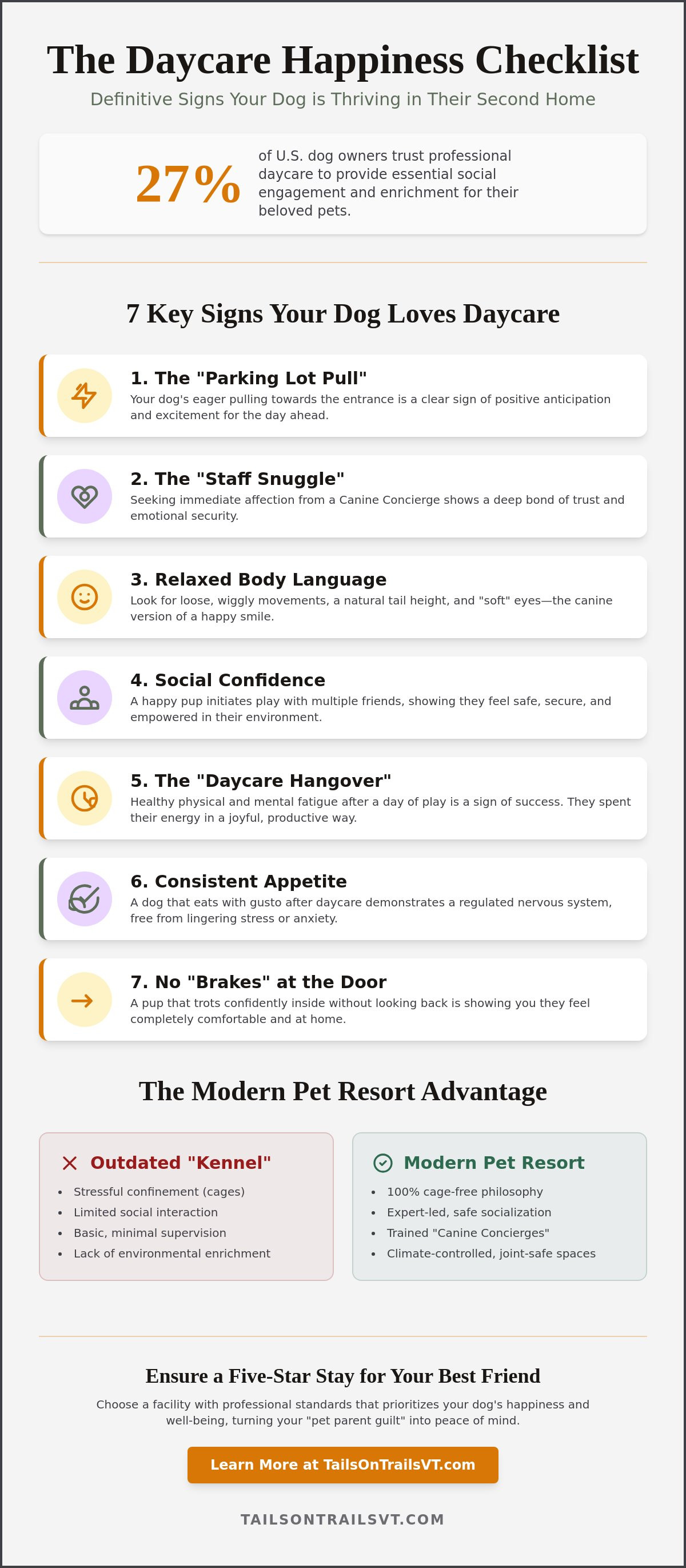
The "Parking Lot Pull": Does your dog lead the way the moment the car door opens? Eager pulling toward the entrance is a clear indicator of positive anticipation and excitement.
The "Staff Snuggle": Watch how they interact with our Canine Concierges. Seeking immediate physical affection or leaning into a staff member shows a deep bond of trust and emotional security.
Relaxed Body Language: Look for loose, wiggly movements and "soft" eyes. A happy dog carries their tail at a natural height with a fluid, rhythmic wag that involves their whole body.
Social Confidence: A thriving pup doesn't just stand on the sidelines. They initiate play with a variety of "besties," showing they feel safe and empowered in their environment.
Post-Play Contentment: The famous "daycare hangover" is a sign of success. This is healthy physical and mental fatigue, indicating they spent their energy in a productive, joyful way.
Consistent Appetite: Stressed dogs often refuse treats or meals. If your pup eats with gusto upon returning home, it’s a sign their nervous system stayed regulated throughout the day.
Lack of Hesitation: There are no "brakes" when walking through the door. A dog that trots inside without looking back is a dog that feels completely at home.
Decoding Body Language in the Playgroup
Understanding "meta-signals" is essential for reading the room. The classic "play bow," where a dog lowers their front half while keeping their rear up, is a universal invitation to fun. It tells other dogs that the following "rough" movements are purely for sport. We also look for "soft eyes" and open mouths, which are canine versions of a relaxed smile. If you're ready to see these happy behaviors in action, consider booking a stay at our premium pet resort.
The Arrival Test: What Happens at the Door?
The moment of arrival is the ultimate truth test. A dog that practically slips their harness to reach the front desk is giving the facility the highest compliment possible. For shy dogs, we look for a "slow burn" of confidence; they might enter quietly but quickly gravitate toward a favorite staff member. Fearful dogs will plant their feet or tuck their tails, but a dog that thrives on the signs your dog loves daycare will greet the Canine Concierge with a wagging tail and a happy nuzzle.
Evaluating the "Daycare Hangover" vs. Overstimulation
The "daycare hangover" is a term often used by pet parents to describe the deep, satisfying sleep that follows a day of play. It's often seen as a badge of honor for a successful visit, but it requires careful observation to ensure it's the right kind of tired. One of the most telling signs your dog loves daycare is how they transition from the high-energy excitement of the resort back to the tranquility of your home. A truly happy dog doesn't just collapse from exhaustion; they settle into a state of peaceful contentment.
Socializing is a high-level cognitive activity that taxes the brain far more than simple physical exercise. While running in a field is purely physical, navigating a playgroup requires constant mental processing. Your dog is reading micro-signals from peers, responding to the gentle guidance of a Canine Concierge, and managing their own social boundaries. This mental load is why social dogs often seem more tired after daycare than after a long hike. It’s a holistic exhaustion that benefits both the mind and the body, provided the environment is managed professionally.
Healthy Fatigue: What to Expect Post-Daycare
A dog experiencing healthy fatigue will likely head straight for their favorite plush bed or a cool spot on the floor. They might even sleep through their usual dinner time or skip a late-night play session. You should look for relaxed body postures, such as lying on their side with legs outstretched or "flopping" in high-traffic areas where they feel safe. Deep, rhythmic sighs and gentle stretching are excellent indicators that their nervous system is in a "rest and digest" state. Healthy daycare fatigue results from a balance of play and scheduled rest. By the next morning, your pup should be fully recovered, greeting the day with their usual appetite and enthusiasm for their morning walk.
Red Flags: When "Tired" Means "Stressed"
Distinguishing between a content dog and one who is overstimulated is vital for their long-term well-being. If your pup comes home and begins pacing, whining, or panting excessively without recent physical exertion, they may be struggling to decompress from a stressful environment. Irritability is another warning sign. If a normally sweet dog becomes snappy with family members or other household pets, the daycare experience might be too intense. A critical red flag is a refusal to move, eat, or interact for more than 24 hours. While a long nap is standard, prolonged lethargy or hiding in dark corners suggests the dog was overwhelmed rather than engaged. Monitoring these post-visit signs your dog loves daycare ensures you are providing them with a second home that truly nurtures their spirit.
Building Trust: The Role of Staff and the Environment
Trust isn't built overnight; it's earned through consistent, high-touch care that prioritizes your dog’s emotional safety. One of the strongest signs your dog loves daycare is the genuine bond they form with their human caregivers. In a premium pet resort, this relationship is facilitated by high staff-to-dog ratios, ensuring every pup receives the personalized attention they deserve. Professional training in canine behavior is non-negotiable for these experts. Leading facilities often seek voluntary certifications from organizations like the International Boarding & Pet Services Association (IBPSA) to ensure their team can manage complex group dynamics with ease.
A "Dog Concierge" approach elevates the experience from mere supervision to high-end hospitality. This means the staff knows your dog’s favorite scratching spot and their preferred playmates by name. When you receive a digital report card or a photo update while you're at work, you aren't just seeing a picture; you're seeing proof of their social fulfillment. These updates provide the peace of mind you need, confirming that your family member is thriving in a second home that values their unique personality.
Questions to Ask Your Daycare Provider
Before committing to a facility, ask specific questions about their operational standards to ensure they meet your expectations. Inquire about their "no cage" policy and how they manage essential rest periods. High-end resorts use structured schedules to ensure dogs don't reach a state of overstimulation. Ask how they handle "dog selective" seniors or shy puppies who might need a slower pace. A reputable facility will always group dogs based on a combination of size, temperament, and energy level rather than simply using a one-size-fits-all approach.
The "Staff Connection" as a Happiness Indicator
Watch your dog’s reaction when a staff member approaches the lobby. Do they look for that specific person with a wiggly tail and a happy nuzzle? This "staff connection" is one of the most reliable signs your dog loves daycare. If the staff can describe your dog’s specific personality quirks, like how they "talk" when they're excited or their favorite way to solicit a belly rub, you know they are being seen as an individual. This intimate level of care transforms a facility into a true sanctuary. If you're looking for this level of dedicated service in Vermont, book a tour of our luxury pet resort today to see our Canine Concierges in action.
Ensuring a Five-Star Stay: Why Professional Standards Matter
A premier pet resort is more than just a place for your dog to spend the day. It is a curated environment where safety and joy are the primary metrics of success. When you look for the signs your dog loves daycare, you are really looking for a reflection of the facility's standards. A "free-for-all" play model often lacks the structure needed for true well-being. Instead, look for an enrichment-focused approach. This ensures that your pup’s mind stays as sharp as their body is active. Professional supervision by a Canine Concierge means that every interaction is intentional. This level of care is what separates a standard facility from a five-star resort.
Trust your intuition. You are the world’s leading expert on your dog’s unique personality. If your gut tells you they are thriving, and their behavior at the door confirms it, you've found a sanctuary. This peace of mind is invaluable. It allows you to enjoy your day, whether you are in a meeting or exploring the Mount Snow slopes, knowing your family member is in expert hands. With the U.S. pet daycare market now estimated at $3.7 billion annually, the industry is shifting toward this more professional and service-driven model.
The Luxury Difference in Canine Care
High-end care means moving away from industrial settings and cold environments. Our "Pup Cabins" offer a serene, private space for rest, featuring premium bedding that reduces the stress of being away from home. No animal deserves to be in a wire cage all day. A stress-free setting is essential for socialized dogs to maintain their emotional balance. Enrichment services, such as scent work or structured group activities, provide the mental stimulation that makes daycare a productive investment in your dog’s future.
Take the Next Step for Your Pup’s Social Life
Observe your dog’s next drop-off with new eyes. Watch for that eager trot and the happy greeting for the staff. These are the undeniable signs your dog loves daycare and views it as their second home. You are a great pet parent for prioritizing their happiness and seeking out the highest standards of care. Choosing a facility that treats every pup like family is the best gift you can give your companion. We invite you to see how hospitality and love can transform your dog's day.
Give Your Pup the Vacation They Deserve
Recognizing the signs your dog loves daycare is the final step in replacing pet parent guilt with genuine peace of mind. You now know to look for that enthusiastic parking lot pull and the deep, restful sleep that follows a day of social fulfillment. These behaviors prove your dog isn't just being watched; they're thriving in a second home. True happiness is found when your pup views their caregivers as family and the resort as their favorite destination.
At Tails On Trails Pet Resort, we believe every dog deserves a cage-free experience rooted in love and luxury. Our Canine Concierges provide the expert, tailored care that ensures your pup feels like a cherished family member. With our serene, climate-controlled environment and a strict "no wire cages" policy, we offer the premium standard your dog deserves while you enjoy the Mount Snow slopes or the office. You've done the research and learned the cues. Now, it's time to let your pup experience the joy of a true Vermont pet resort.
Book a Luxury Daycare Session at Tails On Trails Pet Resort and watch your dog’s confidence soar in an environment designed for their total well-being.
Frequently Asked Questions
Is it normal for my dog to be very thirsty after daycare?
It's very common for dogs to drink more water than usual after a session because they've been active and panting during play. While our resort provides constant access to fresh water, the high-energy excitement often means pups forget to stop for long drinks until they settle down. Think of it like an athlete finishing a game. As long as they aren't showing signs of physical distress, a healthy thirst is a normal byproduct of a fun, physical day.
How many days a week should my dog go to daycare?
Most pet parents find that one to three days per week is the ideal frequency for maintaining social skills without causing overstimulation. Recent industry data shows that approximately 27% of dog owners use these services to balance their professional schedules. Your dog’s specific energy level and personality will dictate the perfect rhythm. Some high-energy pups thrive on a daily routine, while others prefer a few days of luxury interspersed with rest at home.
What if my dog is shy during the first few visits?
A "slow burn" of confidence is perfectly normal during the first few visits to a new environment. Our Canine Concierges specialize in helping shy pups acclimate by pairing them with gentle, low-energy playmates in a stress-free setting. It’s one of the subtle signs your dog loves daycare when they begin to move from the sidelines into active play. We move at your pup's pace to ensure they feel safe and loved every step of the way.
Can a dog be "too old" for daycare?
Dogs are never "too old" for a resort experience, though their needs definitely change as they mature into their senior years. Senior dogs often enjoy the mental stimulation of being around others while spending more time in our climate-controlled Pup Cabins for restful naps. We tailor the experience to their specific mobility and energy levels. As long as your vet approves of their physical health, older dogs benefit significantly from the gentle socialization we provide.
What happens if my dog doesn’t get along with another guest?
We manage guest interactions through careful grouping based on temperament, size, and energy levels to prevent conflict. If a dog isn't "clicking" with a specific playmate, our staff simply moves them to a different group to ensure a harmonious stay. Because we maintain high staff-to-dog ratios, we can intervene before a minor disagreement becomes a problem. Our focus is always on maintaining a peaceful, second-home environment where every pup feels comfortable and secure.
How do I know if the daycare is too crowded?
You can identify a crowded facility by looking at the staff-to-dog ratio and the available square footage per animal. Professional standards, which will be further regulated by laws like Massachusetts' Ollie's Law in December 2026, suggest that one staff member should supervise no more than 10 to 15 dogs. If the play area feels chaotic or the staff seems overwhelmed, the facility may be over-capacity. A premier resort always prioritizes individual space and personalized care over guest volume.
Should I be worried if my dog sleeps all evening after daycare?
You shouldn't be worried if your dog sleeps deeply after their visit; this is the healthy "daycare hangover" indicating a successful day. This deep rest is one of the most positive signs your dog loves daycare because it proves they were both physically active and mentally engaged. Socializing is hard work for a dog’s brain. As long as they are happy to see you and return to their normal self by the next morning, that long evening nap is a sign of fulfillment.


Comments