How to Spot a Bad Dog Kennel: Red Flags Every Pet Parent Should Know
- Jul 1
- 12 min read
A high price tag doesn't always guarantee a five-star stay for your four-legged family member. We understand the heavy knot of guilt that forms when you think about leaving your best friend behind, especially when the industry can feel like a maze of cold, industrial cages. It's heartbreaking to worry if they'll be ignored or unsafe while you're away. Knowing how to spot a bad dog kennel is the first step toward replacing that anxiety with absolute confidence. You deserve to feel as relaxed as your pet during your time apart.
We believe every animal guest should be treated with the same hospitality and warmth as a human traveler. This guide will teach you exactly how to distinguish between a stressful holding facility and a true pet resort that prioritizes joy, comfort, and uncompromising safety. We're pulling back the curtain on the industry to provide a clear checklist of red flags, from lack of transparency to outdated safety protocols. By the end of this article, you'll have the tools to choose a sanctuary that treats your dog like the family they truly are.
Table of Contents
Sensory Red Flags: What You Should See, Smell, and Hear
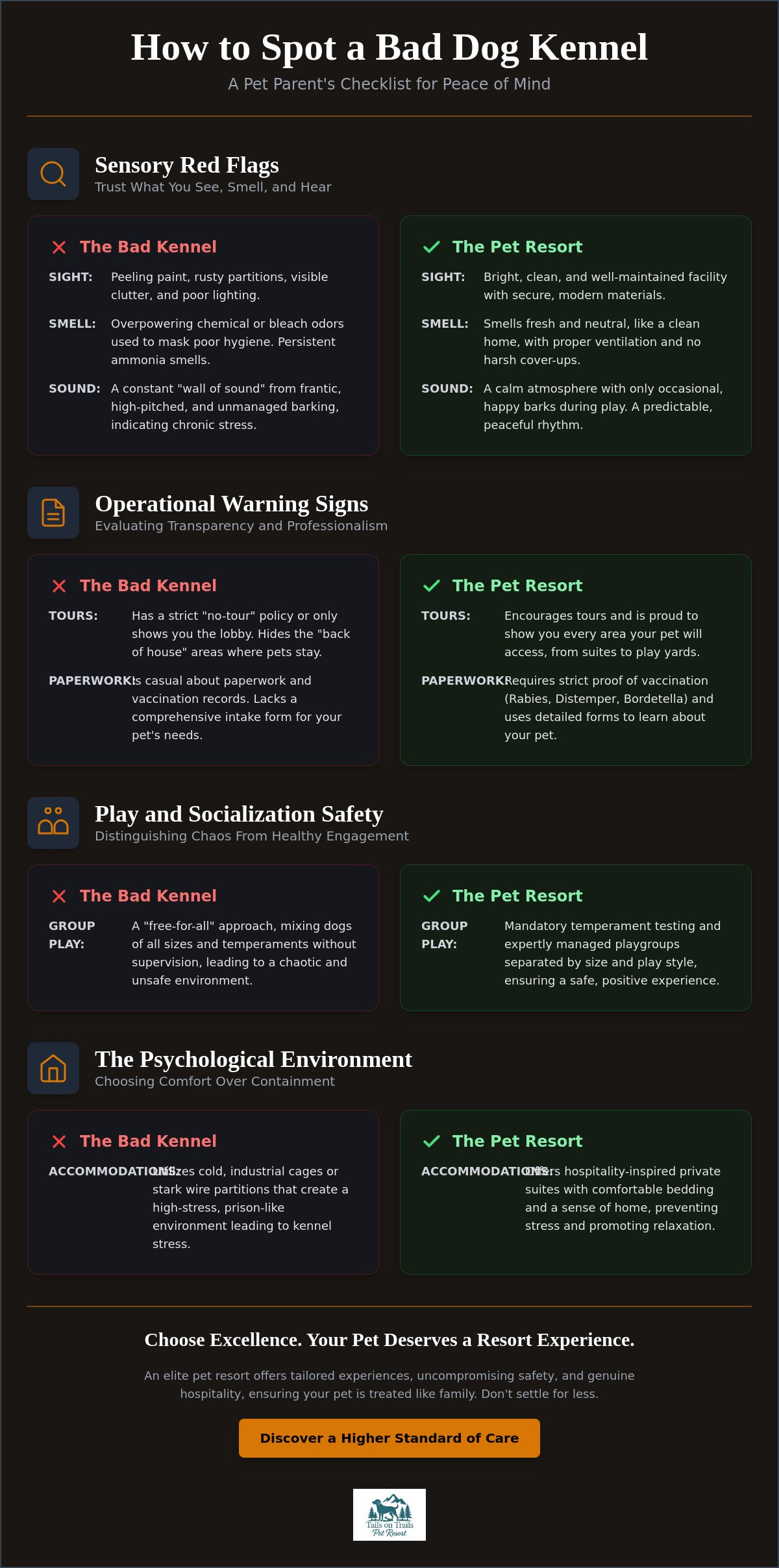
Walking into a pet care facility should feel like arriving at a welcoming mountain lodge. It's a place where the atmosphere is light and the hospitality is genuine. Unfortunately, some facilities operate more like industrial warehouses. We define a "bad kennel" as any business that prioritizes throughput and volume over the individual well-being and joy of its guests. Understanding how to spot a bad dog kennel requires you to look past the glossy brochures and focus on the immediate reality of the environment. When you are first learning what to expect from a boarding kennel, your senses are your most reliable allies. Trust your eyes first. If you notice peeling paint, rusty wire partitions, or general visual clutter, it's a sign of deeper neglect. These physical flaws often mirror the level of attention paid to the animals themselves. Rust can lead to cuts or infections, while peeling paint may be ingested by curious guests. A facility that ignores its own infrastructure is likely cutting corners on the personalized care your pet deserves.
The Olfactory Test: Beyond Just "Clean"
Many people believe a strong smell of bleach is a sign of a sterile environment. It isn't. In many cases, an overpowering chemical scent is a "Bleach Mask" used to hide poor hygiene or inadequate ventilation. If the air feels heavy or stings your nose, it's a warning sign. Persistent ammonia odors are even more concerning; they suggest that waste is not being removed promptly or that the facility's air filtration is failing. This is a primary indicator of how to spot a bad dog kennel during your initial tour. A truly professional pet resort will smell like a fresh, well-maintained home, devoid of both foul odors and harsh chemical cover-ups.
The Sound of Stress: Evaluating the Volume
The soundscape of a facility tells a story. While some barking is natural, the tone and frequency reveal the emotional state of the dogs. Happy barking is usually short-lived and happens during play or greetings. Frantic, high-pitched, or constant barking is a sign of high cortisol and chronic stress. When you enter a facility, listen for a "wall of sound." If the noise is deafening and unmanaged, it often points to inadequate staffing or poor environmental design. A managed play environment should have a predictable rhythm. Chaotic noise suggests that the dogs are overwhelmed rather than engaged. If the staff isn't actively working to soothe or redirect loud groups, your dog's peace of mind may be at risk. High stress levels can lead to a weakened immune system, making a loud and chaotic environment a health hazard as well as a psychological one.
Operational Warning Signs: Transparency and Vetting
Transparency is the bedrock of trust. While sensory cues give you an immediate gut feeling, examining the operational bones of a business is how to spot a bad dog kennel with precision. A reputable resort operates with an open-door philosophy. They should welcome you into their space to see exactly where your family member will sleep and play. If a facility hides behind a "no-tour" policy, consider it a non-negotiable dealbreaker. This secrecy often masks substandard conditions or a chaotic environment they don't want you to witness.
The Importance of Physical Tours
A tour isn't just a courtesy. It's a window into the daily life of the guests. Look for professional floor drainage and bright, natural lighting in the "back of house" areas. Staff should show genuine pride in their suites, interacting with you warmly rather than rushing the process. Be wary of facilities that only allow tours during "off-peak" hours. True excellence doesn't have a schedule; it's maintained around the clock. When preparing for your visit, it helps to have a checklist for choosing a kennel to ensure no detail is overlooked.
Paperwork and Professionalism
Professionalism starts with the first piece of paper you sign. A facility that says they "don't worry about paperwork" is a major health hazard. Strict vaccination requirements for Rabies, Distemper, and Bordetella are essential for the safety of the entire pack. Beyond health records, look for comprehensive intake forms. They should ask about your dog's personality, favorite toys, and specific triggers. If they skip the "fine print" or seem casual about liability, they're likely running an amateur operation. You can start discovering a higher standard of care by looking for these markers of professional dedication.
The industry standard for staffing is often spread too thin. This leaves guests unsupervised for long stretches. A premier resort prioritizes a high-touch model with low staff-to-pet ratios, ensuring every guest receives individual attention. Ask specifically about their emergency protocols:
Which local veterinarian do you partner with for emergencies?
Is there a staff member on-site at all times to monitor the guests?
How do you handle immediate medical needs after hours?
Peace of mind comes from knowing there's a plan for every scenario, no matter how unlikely. A facility that stammers over these questions isn't prepared to offer the level of protection your dog deserves.
Evaluating Play and Socialization Safety
Playtime should be the crown jewel of your dog's stay, a moment of pure, unadulterated joy. Unfortunately, many facilities treat socialization as an afterthought, leading to unmanaged chaos. If you're wondering how to spot a bad dog kennel, start by asking about their play philosophy. A "free-for-all" approach where dozens of dogs are simply released into a yard without structure is a major red flag. This lack of management often leads to overstimulation, bullying, or serious injury. A true resort treats social time as a curated experience, where staff members are physically present in the room to guide interactions and maintain a peaceful, happy rhythm.
Before any guest joins a group, a reputable facility conducts a rigorous temperament test. This isn't just a quick sniff through a fence. It's a structured evaluation of body language, social cues, and comfort levels. We believe in slow, intentional introductions that prioritize the emotional safety of every visitor. If a business allows a new dog to jump straight into a large pack without a formal assessment, they're prioritizing convenience over your pet's safety. Expert supervision means staff are actively engaged, not watching from behind a glass window or through a security camera.
Group Dynamics and Size Matching
Size matching is a non-negotiable standard of care. Mixing a large breed with a toy breed creates a risk for "predatory drift," where a large dog's high-energy play can accidentally trigger a dangerous instinctual response. A gold-standard ratio for supervised group play is typically one dedicated staff member for every 10 to 15 guests, ensuring that no interaction goes unnoticed. Beyond simple play, enrichment services like scent work or agility puzzles keep our guests' minds as active as their paws, turning a standard romp into a productive adventure.
Outdoor Access and Exercise
The physical environment matters just as much as the social one. A simple concrete pad is a clinical solution, not a hospitality one. Guests deserve access to shaded outdoor spaces and climate-controlled indoor areas to prevent overheating or discomfort. Safety is paramount, which is why double-gate systems and high-quality fencing are essential requirements. Be wary of "exercise" that consists of a dog being left alone in a yard for hours. Solitary confinement isn't exercise; it's isolation. A high-end resort ensures that outdoor time is an active, engaging part of the day, filled with fresh air and supervised fun.
The Psychological Red Flag: High-Stress Containment
A dog's mental health is just as vital as their physical safety. While a facility might look clean on the surface, the psychological atmosphere can be heavy and draining. Learning how to spot a bad dog kennel involves observing the current residents with a keen, empathetic eye. Look for signs of "Kennel Stress" during your visit. This often manifests as repetitive pacing, excessive panting even in cool air, or a vacant, lethargic gaze in the guests. These aren't just personality quirks; they're physiological responses to an environment that feels more like a prison than a retreat. A "safe" room isn't truly safe if it lacks the warmth and engagement necessary to soothe a dog's spirit.
Modern Boarding vs. Traditional Kenneling
The industry has seen a beautiful shift away from industrial wire cages toward domestic-inspired settings. This evolution in Luxury Overnight Boarding focuses on "stress-free" environments that mirror the comforts of home. Traditional kennels often rely on cold, loud, and reflective surfaces that amplify noise and anxiety. In contrast, suite-style accommodations use soft materials and open-concept designs to reduce separation anxiety. When a dog feels like a pampered guest in a cozy bedroom rather than an inmate in a cell, their cortisol levels remain stable. This psychological security is the hallmark of a high-end resort.
Mental Health and Enrichment
Meaningful engagement is the best antidote to anxiety. A facility that practices "warehousing" simply leaves guests to wait out the clock until their owners return. True hospitality includes enrichment services that challenge the mind and lift the spirit through scent work, puzzles, or one-on-one cuddles. If a facility doesn't provide detailed report cards or personalized photo updates, it's a significant red flag. You deserve to know how your family member is actually feeling, not just that they were fed and watered. Transparency in daily activities proves that the staff is actually interacting with your pet, not just managing a checklist.
Your dog's homecoming is the ultimate review of their stay. A dog returning from a high-quality resort should be happy and relaxed, perhaps a bit tired from a fun-filled vacation. If they return "shut down," unusually clingy, or showing signs of extreme thirst, the facility likely failed to meet their basic psychological needs. Never ignore these post-stay behaviors. They're the most honest feedback you'll ever receive about a facility's true standards. You can choose a sanctuary that prioritizes emotional wellness to ensure your pet’s next trip is as restorative as your own.
Choosing Excellence: The Pet Resort Difference
The final step in understanding how to spot a bad dog kennel is recognizing the profound shift from containment to hospitality. While a standard facility focuses on the mechanics of care, a luxury pet resort focuses on the quality of the experience. We believe your dog is a guest, not an inmate. This means their stay should mirror the comfort and excitement of a high-end vacation. From plush bedding in private suites to personalized greetings from our staff, every detail is designed to alleviate the stress of travel and replace it with genuine joy. When a facility treats your pet with this level of dignity, the "boarding guilt" simply melts away.
Excellence is found in the ability to tailor care to the individual. A senior dog has different needs than a high-energy puppy or a shy rescue. A premier resort doesn't offer a one-size-fits-all schedule. Instead, they customize exercise, rest, and social interactions to suit your pet's unique personality and physical requirements. This bespoke approach ensures that even the most sensitive guests feel secure and cherished throughout their stay. Real-time updates and transparent communication provide the ultimate peace of mind, allowing you to enjoy your own travels while seeing your best friend thrive in a loving, home-like environment.
Beyond Basic Boarding
A true sanctuary offers more than just a place to sleep. It provides a holistic approach to health and happiness. Specialized services like a Canine Wellness center or professional dog rehabilitation physical therapy elevate the experience far beyond industry standards. These offerings show a deep commitment to the long-term vitality of every guest. Our Dog Concierge service ensures that every whim is met, whether it's a specific feeding routine or extra cuddles before bed. Building a long-term relationship with a high-touch facility creates a "home away from home" that your dog will actually look forward to visiting year after year.
Your Final Vetting Checklist
Before you make your final decision, take a moment to evaluate the "vibe" of the establishment. The way the staff speaks about their guests tells you everything you need to know about their culture. Use this checklist during your first phone call or visit to ensure you've found the right fit:
Do they ask detailed questions about my dog's triggers, favorite toys, and personality?
Are they enthusiastic about showing me their accommodations and play areas?
Do they offer specialized enrichment or wellness services tailored to my dog's age and breed?
Does the staff appear calm, professional, and genuinely happy to be working with the animals?
Trust your intuition. If a facility feels cold or clinical, it likely isn't the right sanctuary for your family member. You deserve a partner in pet care who is as invested in your dog's happiness as you are. Ready for a different kind of stay? Discover the Tails On Trails Pet Resort experience.
Your Journey Toward Peace of Mind Starts Here
Your best friend deserves a stay that feels like a true retreat, not a clinical obligation. By trusting your senses, insisting on operational transparency, and prioritizing psychological wellness over mere containment, you've gained the tools to protect your pet. Knowing how to spot a bad dog kennel empowers you to choose a sanctuary where hospitality and safety go hand in hand. You don't have to settle for industrial "warehousing" when a heartfelt, home-away-from-home experience is within reach.
We are dedicated to providing the high-touch care that your family member deserves. Our resort features cozy, climate-controlled accommodations and expertly supervised group play sessions to ensure every guest stays happy and healthy. With our dedicated Canine Wellness Center, we go beyond basic care to support your dog’s long-term vitality and joy. It's time to replace travel anxiety with the excitement of a luxury getaway for your pet.
Experience Stress-Free Boarding at Tails On Trails Pet Resort
Your dog's next adventure should be just as restorative and joyful as your own. We look forward to welcoming your family into ours with open arms and wagging tails.
Frequently Asked Questions
Is it normal for a dog kennel to smell like dogs?
A faint, natural scent is expected in any shared space, but it should never be overwhelming or foul. A premier resort uses advanced air filtration and frequent housekeeping to maintain a fresh, home-like atmosphere. If you're hit with an overpowering odor or a heavy "bleach mask" scent, it's a primary indicator of how to spot a bad dog kennel that relies on cover-ups rather than true hygiene.
Can I tour a dog boarding facility without an appointment?
You should be able to tour any reputable facility, though many prefer scheduled visits to protect the peaceful rhythm for their current guests. An open-door policy shows transparency and genuine pride in their suites. If a business refuses to show you exactly where your pet will sleep and play, consider it a non-negotiable dealbreaker for your peace of mind.
What should I do if my dog seems traumatized after boarding?
If your pet returns home "shut down" or unusually anxious, start by consulting your veterinarian to rule out any physical discomfort. Once they're cleared, reflect on the facility's environment and consider a shift toward a higher-touch resort. A positive boarding relationship should leave your dog feeling like they've just returned from a relaxing mountain getaway, not a stressful ordeal.
How do I know if a playgroup is too big for my dog?
A playgroup is too large if the supervisor cannot maintain active engagement and eye contact with every guest. Chaotic, unmanaged energy is a sign that the group size has exceeded the staff's capacity for safety. We prioritize small, curated groups where every interaction is guided by an expert caregiver to ensure both emotional and physical well-being for the entire pack.
What is the ideal staff-to-dog ratio for daycare?
The ideal safety standard is one dedicated staff member for every 10 to 15 dogs. This ratio allows for meaningful individual interaction and immediate intervention if play becomes too intense. Facilities that stretch their staff thinner are prioritizing volume over the individual joy and safety of the guests in their care. High-touch service requires a commitment to lower ratios.
Should I worry if a kennel doesn’t ask for my vet’s information?
You should be very concerned if a facility doesn't require comprehensive veterinary records and emergency contact information. This laxity suggests they're also skipping health checks for other guests, which puts your pet at risk for contagious illnesses. Professionalism in pet care always begins with a thorough vetting of every guest's health history to ensure a safe, communal environment.
Is it a red flag if a boarding facility is too quiet?
Silence is often a wonderful sign of a low-stress, well-managed environment. In a hospitality-driven setting, guests are often resting in their cozy suites or engaged in calm, productive enrichment. Constant, frantic barking is usually the real red flag, suggesting that the animals are overwhelmed or undersupervised. A peaceful atmosphere reflects a sanctuary where guests feel truly at home.
How can I tell if the "luxury" claims of a pet resort are legitimate?
True luxury is found in the details of the guest experience, not just a fancy price tag. Legitimate resorts offer specialized accommodations like private suites, real-time updates, and high-touch amenities like a Canine Wellness Center. If the facility looks like a standard warehouse with a "luxury" label, it's a key lesson in how to spot a bad dog kennel that prioritizes marketing over actual compassion.


Comments