Pet Sitter vs. Dog Boarding for Anxious Dogs: Choosing the Right Sanctuary
- May 24
- 13 min read
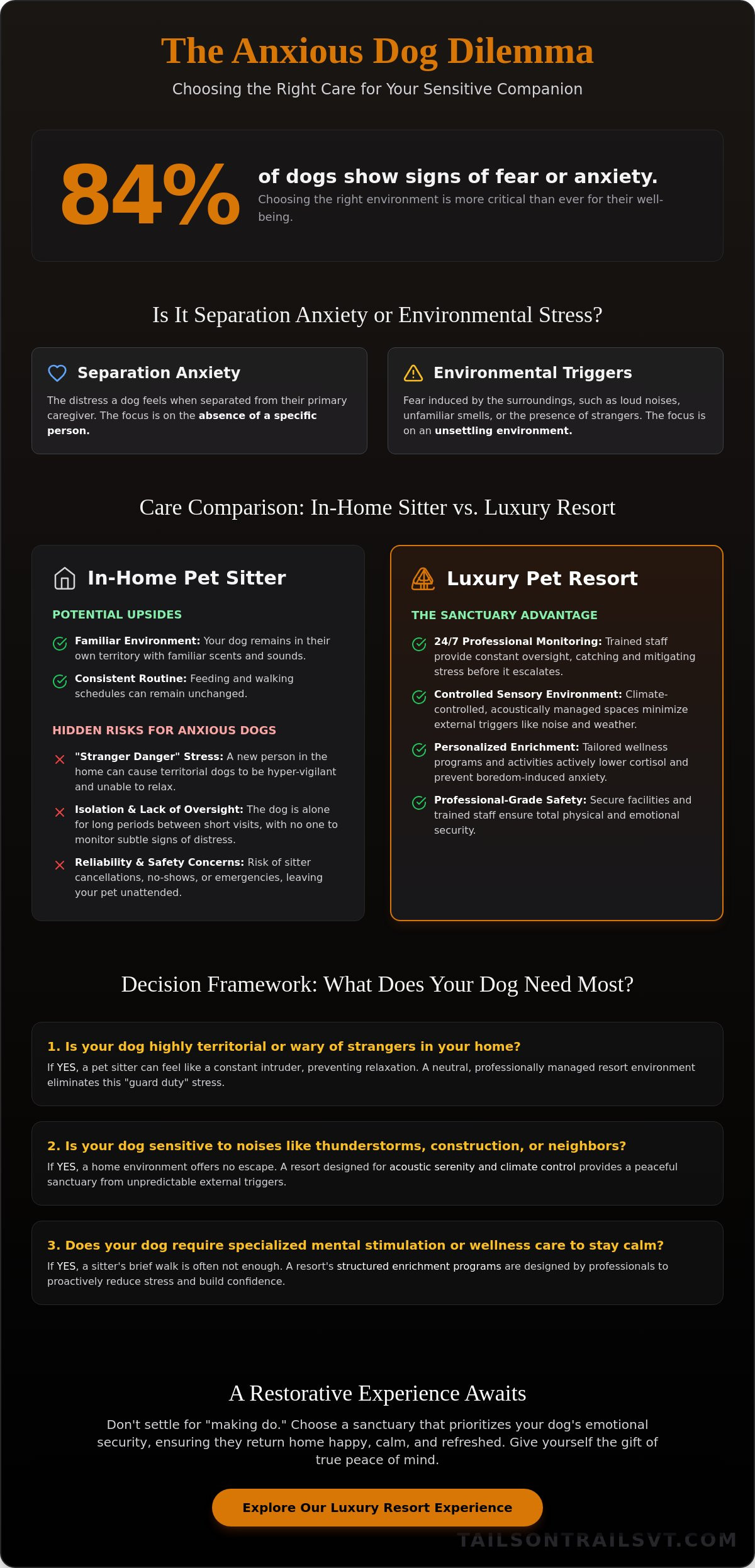
The familiar comfort of your own living room might seem like the obvious choice for a nervous pup, but for many, the isolation of a solo pet sitter can actually heighten a dog's uncertainty. Recent studies show that over 84% of dogs exhibit at least mild signs of fear or anxiety, making the choice between a pet sitter vs dog boarding for anxious dogs a deeply personal and critical decision. You want to avoid that heartbreaking shut-down behavior, yet the thought of a traditional facility feels cold and clinical.
We understand that pet-parent guilt is heavy, and you deserve to travel with total peace of mind. You're looking for more than just a place to stay; you're seeking a sanctuary where professional-grade safety meets heartfelt hospitality. This guide explores whether a private sitter or a professional luxury resort provides the ultimate emotional security for your beloved family member. We'll compare the benefits of constant monitoring and specialized care so you can choose the environment that ensures your dog returns home happy, calm, and refreshed.
Key Takeaways
Learn to distinguish between separation anxiety and environmental triggers to ensure your dog's specific emotional needs are met with the right care model.
Weigh the delicate trade-offs of a pet sitter vs dog boarding for anxious dogs, focusing on how a stranger in the home might impact territorial or sensitive pets.
Discover how a hospitality-focused sanctuary uses climate-controlled serenity and sensory management to prevent the stress often found in traditional containment settings.
Explore how personalized enrichment services and canine wellness programs can transform a stay into a restorative experience that proactively lowers cortisol levels.
Gain a professional framework to help you choose between the familiarity of a home routine and the superior monitoring and safety of a high-end resort.
Table of Contents
Why Anxiety Makes Choosing Pet Care a High-Stakes Decision
For a dog who views the world through a lens of sensitivity, a change in routine isn't just a minor inconvenience; it's a significant physiological event. When you're weighing the choice of pet sitter vs dog boarding for anxious dogs, you're really looking for a sanctuary that understands the nuanced difference between a dog who misses your presence and one who fears the unknown. A "one size fits all" approach simply doesn't work for the most sensitive souls. Anxiety is personal. It affects everything from a dog's digestive health to their sleep cycles, and without professional-grade monitoring, these subtle shifts in wellness can easily go unnoticed.
With a staggering 84% of dogs exhibiting signs of fear or anxiety according to 2026 research from Texas A&M University, the stakes for professional oversight have never been higher. While many people look for a basic definition of What is dog boarding to understand their options, the modern reality for anxious pets has evolved far beyond simple kenneling into a high-touch hospitality model. Professional observation is the key to preventing stress-related illness, ensuring that your dog's "vacation" doesn't become a trial of endurance.
Understanding Your Dog's Specific Anxiety Triggers
Identifying the root of your dog's distress is the first step in selecting their home away from home. Is it truly separation from you, or is it the fear of a shifting environment? For some, the familiar scents of home provide a necessary anchor. However, for territorial dogs, a pet sitter can introduce a "Stranger Danger" element that keeps them in a state of high alert. Noise sensitivity also plays a massive role. The sound of a neighbor's lawnmower or a distant siren can be magnified when a dog feels vulnerable. In these cases, a climate-controlled resort designed with acoustic serenity in mind can offer a level of peace that a standard suburban home simply cannot match.
The Hidden Cost of 'Making Do' with Subpar Care
Choosing an inadequate care solution carries risks that extend far beyond a few days of pacing. A single negative experience can lead to long-term behavioral regression, undoing months of expensive training or socialization efforts. High-needs pets require more than just a check-in; they need 24/7 professional oversight to ensure they remain in a "green zone" of emotional comfort. Peace of mind is a valid metric for you, the pet parent, as well. You shouldn't have to spend your time away worrying about sitter reliability or home security. When your dog is in a professional wellness environment, you can rest easy knowing their emotional security is the top priority.
The Case for a Pet Sitter: Comfort of Home vs. Reliability Risks
The appeal of a pet sitter is often rooted in the quiet, predictable rhythm of the home. For many, the familiar scent of your favorite chair and the specific sound of the backyard gate provide a necessary anchor. When you're debating a pet sitter vs dog boarding for anxious dogs, it's natural to assume that keeping your pup in their own environment is the kindest choice. Stability is a powerful tool for emotional regulation. Experts from the Cornell University College of Veterinary Medicine offer various ways to help your dog cope with unsettling situations, and for some, that means staying put. However, the "home is best" narrative often overlooks a critical psychological factor: the "Stranger Danger" stressor.
For a territorial or deeply sensitive dog, a pet sitter isn't necessarily a comforting companion; they're an uninvited guest in a private fortress. This can lead to a state of hyper-vigilance where the dog feels the need to "guard" the home without your presence to guide them. Instead of relaxing, they spend their days pacing the hallways and listening for every floorboard creak. This heightened state of alert can be just as exhausting as the stress of a new environment. If your dog requires specialized mental stimulation to stay calm, a simple 30-minute walk from a sitter might not be enough. You might find that professional enrichment services offer a more robust solution for managing a stressed mind.
When In-Home Care Works Best
In-home care truly shines for geriatric dogs who struggle with extreme mobility issues or those with strictly managed medical routines that are difficult to transport. It's also a beautiful option for multi-pet households where the "pack" can provide its own sense of security and companionship. Short-duration absences, such as an overnight stay or a weekend getaway, are the sweet spot for sitters. In these brief windows, the risk of boredom or territorial anxiety is minimized, allowing the dog to rest in their favorite sunspot until you return.
The Risks of Solo Caretakers
The most significant concern with solo sitters is the reliability gap. Unlike a professional resort with a full hospitality team, a solo caretaker has no backup. If they face a personal emergency, a sudden illness, or even a car breakdown, your anxious dog is left alone to navigate their fears. There's also a lack of standardized safety protocols. Many "hobbyist" sitters lack the medical expertise to identify the early signs of a stress-induced health crisis. Home security is another factor; having a single individual with access to your house for a week introduces a layer of vulnerability that a secure, monitored facility avoids. Without the professional-grade monitoring of a dedicated team, the burden of "what if" stays squarely on your shoulders.
Reimagining Boarding: Why a Luxury Resort Isn't a 'Kennel'
Forget the outdated image of cold concrete floors and the echoing din of a high-volume facility. When navigating the choice of a pet sitter vs dog boarding for anxious dogs, it's vital to distinguish between basic containment and true hospitality. A modern luxury resort operates on a philosophy of care that mirrors a high-end vacation. Instead of being "stored," your dog is welcomed as an esteemed guest. This shift in mindset changes everything from the physical layout of the building to the way staff interact with every sensitive soul in their care. While a pet sitter offers a familiar home, a professional resort offers a curated environment specifically engineered to keep cortisol levels low.
One of the greatest advantages of a dedicated facility is the presence of a professional team. Unlike a solo sitter who may be juggling multiple clients or personal errands, a resort provides a continuous safety net. This 24/7 staffing model ensures that an anxious dog is never truly alone. If a guest feels unsettled at 2:00 AM, there is a compassionate professional ready to offer a soothing word or a quiet check-in. This level of unwavering presence provides a structural security that is simply impossible for a single individual to maintain over several days.
The Sensory-First Design of a Luxury Retreat
Acoustic management is the cornerstone of a stress-free stay. Traditional kennels are often loud, triggering a "barking cycle" that keeps anxious dogs in a state of panic. Luxury retreats utilize sound-dampening materials and strategic layouts to minimize noise transfer, creating a quiet, library-like atmosphere. Climate control also plays a vital role in emotional regulation; maintaining a consistent, comfortable temperature prevents the physical restlessness that often accompanies heat or cold stress. Instead of traditional chain-link runs, guests enjoy individualized suites that feel like private bedrooms. These domestic metaphors aren't just for show. They provide a sense of enclosure and privacy that helps a dog feel safe rather than exposed.
Professional Monitoring and Medical Advocacy
Expert caregivers are trained to look far beyond obvious distress. They spot the "silent" signs of anxiety, such as subtle lip licking, dilated pupils, or obsessive panting, and intervene before a dog reaches a breaking point. For guests with high sensitivity, having an on-site Canine Wellness Center provides an extra layer of reassurance. Standardized feeding and medication protocols eliminate the risk of human error, ensuring your dog's health routine remains precise. This professional advocacy means that if your dog's behavior shifts, a team of experts is already there to adjust their enrichment services or provide the necessary comfort to bring them back to a state of calm.
Decision Framework: Which Choice Best Serves Your Dog?
Selecting the right care model requires a deep dive into your dog's specific personality and social battery. It is a delicate balance between the "Stranger Presence" in your own home and the "New Environment" of a professional facility. While a pet sitter offers the convenience of staying put, a luxury resort provides a level of specialized expertise that a solo caretaker simply cannot match. You aren't just paying for a place to sleep; you're investing in the outcome of a calm, happy pet. When evaluating pet sitter vs dog boarding for anxious dogs, the ultimate question is where your dog feels the most emotionally secure and physically protected.
Consider the emergency protocols for both options. A solo sitter is a single point of failure; if they face a personal crisis, your dog's care is immediately compromised. In contrast, a professional hospitality team offers a structural safety net with multiple caregivers and standardized procedures. This professional-grade monitoring ensures that your dog's medical advocacy and emotional wellness are never left to chance. Before making your final decision, take a moment to explore our dog concierge services to see how personalized care can bridge the gap between luxury and security.
Anxiety Profile Comparison
Understanding your dog's specific type of distress is the key to a successful stay. Environmental Anxiety is a fear of unfamiliar places that is best managed through high-consistency home routines or very gradual exposure to a new sanctuary. However, the Separation Anxiety paradox is real. Many dogs who spiral into panic when left alone in a quiet house actually thrive in a resort setting. The constant, gentle activity and professional distraction of enrichment services prevent them from focusing on your absence. To test your dog's readiness, observe their recovery time after a minor stressor, such as a trip to the vet or a loud thunderstorm. A dog who bounces back quickly is often an excellent candidate for a high-end resort experience.
The 'Trial Run' Strategy
Never leave your dog's first overnight stay to chance. Utilizing Full Day Daycare is the perfect litmus test for future boarding success. It allows your dog to learn the scents, sounds, and friendly faces of the staff without the pressure of an overnight stay. If you're leaning toward a sitter, introduce them on neutral ground first, such as a local park, to prevent territorial guarding. When evaluating a trial stay, look beyond the basic "they were good" report. Ask for specifics on:
Appetite levels: Did they eat with enthusiasm or require encouragement?
Sleep patterns: Did they settle quickly or remain restless?
Social engagement: Did they seek out interaction with caregivers?
A detailed report card from a professional facility will give you the data you need to travel with total confidence.
The Resort Experience: A Sanctuary for the Sensitive
Deciding between a pet sitter vs dog boarding for anxious dogs is ultimately a choice about the depth of care your family member deserves. While a sitter keeps a dog within their four walls, a luxury resort provides a sanctuary where every interaction is intentionally designed to build confidence. We believe that a dog's emotional state is just as important as their physical safety. By shifting the focus from simple supervision to high-touch hospitality, we ensure that sensitive guests don't just endure your absence; they enjoy a restorative retreat of their own. This professional-grade security is why pet parents choose the peace of mind that only a dedicated facility can provide.
Physical tension often mirrors emotional distress, especially in dogs prone to travel-related worry. Our Canine Wellness Center addresses this by offering Dog Rehabilitation Physical Therapy to help guests release the physical manifestations of stress. This holistic approach is a significant differentiator from solo pet sitting. When a dog's body is relaxed, their mind quickly follows. By integrating these wellness practices with our standard Overnight Boarding, we create a comprehensive support system that a solo caretaker simply cannot replicate in a home setting.
Tailored Enrichment for Anxious Minds
Stability is the foundation of trust for a fearful dog. Our Enrichment services are never a "one size fits all" activity. For the most sensitive guests, we prioritize one-on-one play sessions over high-energy group interactions. This allows our caregivers to focus entirely on your dog's body language and comfort levels. We utilize serene settings and calming amenities to manage the sensory environment, ensuring that every activity is a positive building block for their confidence. A structured routine provides a predictable rhythm to the day, which is the most powerful tool we have for helping a nervous dog feel safe and secure.
Final Preparations for a Stress-Free Stay
A successful stay begins long before you pull into the driveway. We encourage you to pack a few comforts from home, such as a favorite blanket or a t-shirt that carries your scent, to provide a familiar anchor in their private suite. Our Dog Concierge is here to ensure every detail of your dog's routine is perfectly preserved. This transparent level of service allows you to take that first step toward a guilt-free vacation. You aren't just leaving your dog at a facility; you're checking them into a professional environment where their happiness is our primary mission. When you choose a resort that prioritizes emotional wellness, you can finally travel with the total peace of mind you deserve.
Embrace a New Standard of Emotional Security
Choosing between a pet sitter vs dog boarding for anxious dogs is a profound act of love. You've explored the delicate balance between the familiarity of home and the unmatched safety of a professional sanctuary. While in-home care offers routine, it often lacks the structural reliability and medical advocacy that a high-end resort provides. You deserve to travel without the heavy weight of pet-parent guilt, knowing your dog isn't just being "watched," but is truly being cared for by experts who understand their sensitive nature.
At our resort, we've replaced clinical containment with climate-controlled, serenity-focused accommodations and a professional Canine Wellness Center. Our hospitality-trained staff specializes in supporting sensitive guests, ensuring every moment is filled with comfort rather than stress. You can rest easy knowing that professional-grade monitoring and tailored enrichment are always at hand. It's time to trade travel anxiety for the total peace of mind that comes from choosing a professional-grade sanctuary.
Reserve a Serene Sanctuary Stay for Your Dog and discover the joy of a happy, calm homecoming. Your best friend's vacation starts here.
Frequently Asked Questions
Is boarding too stressful for a dog with severe separation anxiety?
Boarding can actually be a soothing distraction for dogs with severe separation anxiety because they are never truly alone. In a quiet home with a sitter, the silence often amplifies their focus on your absence. At a professional resort, the gentle rhythm of staff presence and specialized enrichment services provides a continuous social anchor. This active environment helps shift their focus from "where are you?" to "what is happening now?".
How do luxury pet resorts handle dogs that aren't social with other pets?
Luxury resorts prioritize individualized hospitality over high-volume group interactions. If your dog prefers their own company, they receive one-on-one play sessions with our caregivers instead of group daycare. Their private suite acts as a personal sanctuary where they can rest without seeing or interacting with other pets. This tailored approach ensures that every guest feels safe and respected regardless of their social preferences.
Can a pet sitter handle a dog having a panic attack better than a resort?
A professional resort is typically better equipped to manage acute anxiety because of the structural support and team-based monitoring. While a sitter is a single individual, a resort has multiple caregivers and an on-site Canine Wellness Center. If a guest experiences a panic attack, our staff can immediately implement soothing protocols or consult wellness experts. This professional-grade safety net provides a level of medical advocacy that a solo sitter cannot match.
What are the signs that my dog is too anxious for a boarding facility?
Signs of extreme distress include a total refusal to eat for more than 24 hours, persistent self-harming behaviors like obsessive licking, or a complete shutdown where the dog won't move. While mild nervousness is common, these severe physical reactions suggest a different care model might be needed. We recommend a trial run of Full Day Daycare to observe these behaviors in a low-pressure setting before committing to an overnight stay.
How does a resort environment differ from a traditional boarding kennel?
The primary difference lies in the shift from containment to hospitality. Traditional kennels often rely on chain-link runs and high-volume noise, which can be overwhelming for sensitive dogs. A resort environment utilizes acoustic management to minimize barking and offers individualized suites that feel like private bedrooms. When choosing between a pet sitter vs dog boarding for anxious dogs, the resort model offers the specialized care and serenity that traditional kennels lack.
What should I look for in a facility if my dog is sensitive to noise?
Look for a facility that emphasizes acoustic serenity through sound-dampening materials and a strategic layout that separates high-activity areas from sleeping quarters. Climate control is also essential because it allows the building to remain sealed from outside triggers like thunder or sirens. Ask if the resort uses domestic metaphors like "private suites" instead of "runs," as this usually indicates a design focused on peace and quiet.
Is it better for an anxious dog to have a stranger in their house or go to a resort?
This depends entirely on whether your dog is territorial. For many, a stranger in their home is a significant stressor that triggers a state of hyper-vigilance. A resort provides a neutral ground where the dog doesn't feel the need to guard their private fortress. In this professional setting, the pet sitter vs dog boarding for anxious dogs debate often leans toward the resort, as it offers 24/7 monitoring and a team of expert caregivers.
How can I prepare my anxious dog for their first overnight stay?
Start with a few sessions of Full Day Daycare so your dog can build a positive relationship with our staff and the environment. This helps them learn that you always return and that the resort is a safe place. On the day of their stay, pack a "comfort kit" with a t-shirt or blanket that carries your scent. Our Dog Concierge will integrate these familiar anchors into their private suite to ensure their first night feels like a home away from home.


Comments