Post-Operative Dog Care in Vermont: The Complete Guide to a Restorative Recovery (2026)
- Jul 19
- 12 min read
What if your dog's surgical recovery felt less like a clinical confinement and more like a peaceful retreat in the heart of the Green Mountains? It is a heavy burden to carry when your beloved companion returns home from a major procedure. You are likely balancing the fear of re-injury with the confusion of complex medical instructions, all while wishing you could provide a more soothing environment than a plastic crate. Finding the right balance for post-operative dog care vermont shouldn't feel like a second job. It's time to trade that clinical anxiety for the quiet confidence of a professional roadmap.
We understand that your pet is family, and they deserve to be treated like an honored guest during their most vulnerable moments. This guide will show you how to transform the healing process into a high-end restorative journey. We'll explore expert rehabilitation strategies that prioritize emotional well-being alongside physical strength. From understanding the nuances of local recovery resources to creating a low-stress sanctuary at home, you're about to discover how to give your dog the luxury of a truly peaceful comeback.
Table of Contents
Navigating Post-Operative Dog Care in Vermont: Beyond the Clinic
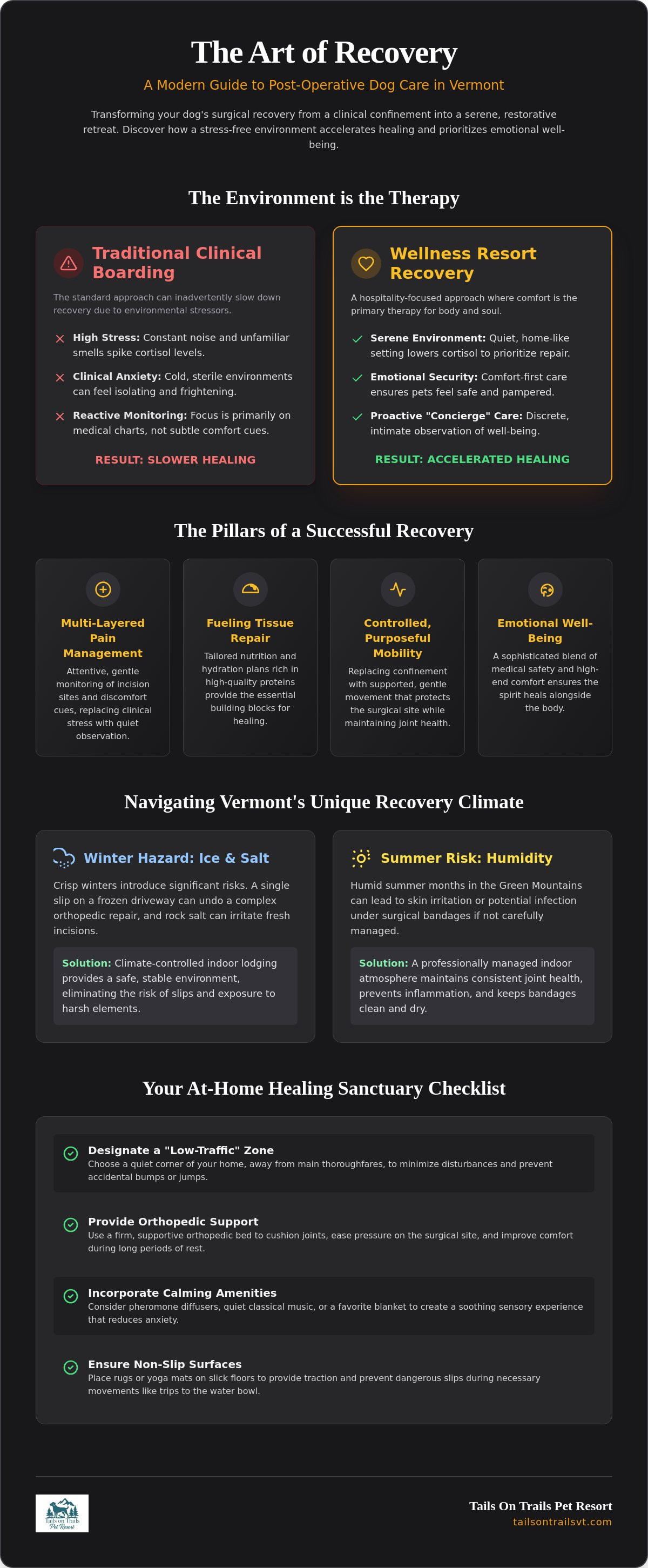
Recovery doesn't end when the surgeon puts down the scalpel. It begins there. Successful post-operative dog care vermont is a holistic journey that bridges the gap between the operating table and your dog's first joyful run through a meadow. While a clinic is essential for the procedure, the environment where your pet spends their first few weeks of healing dictates their recovery speed. Clinical settings often vibrate with high-frequency stress, medicinal smells, and constant noise. These factors spike cortisol levels, which can actively slow down the body's natural repair mechanisms. In contrast, a serene, hospitality-focused environment allows the body to prioritize cellular repair over fight-or-flight responses. We view our visitors as Recovery Guests, not surgical patients, acknowledging their need for dignity and peace during their stay.
The Emotional Weight of Post-Surgical Recovery
Pet parents often carry a heavy sense of guilt when their companion is in pain. Leaving your dog in a cold, metal kennel often feels like a betrayal of the bond you share. We believe in a domestic metaphor for healing. A home-like setting provides the emotional security dogs crave when they're at their most vulnerable. Restorative pet care is a sophisticated blend of medical safety and high-end comfort that ensures the spirit heals alongside the body. By removing the clinical "white coat" anxiety, we create a space where your dog can truly rest without the constant interruption of a busy hospital floor.
Vermont’s Climate and Your Dog’s Recovery
Our local landscape is stunning, but it presents unique challenges for healing animals. During our crisp winters, ice and rock salt are significant hazards for fresh incisions and fragile joints. A single slip on a frozen driveway can undo a complex orthopedic repair in seconds. Conversely, summer humidity in the Green Mountains can lead to skin irritation or infection under surgical bandages if the environment isn't carefully managed. Reliable climate-controlled lodging is vital for maintaining consistent joint health and preventing inflammation. Integrating professional canine physical therapy techniques within a controlled environment ensures your dog avoids the risks of slippery Vermont terrain during those first critical weeks. Whether it's the peak of mud season or a humid July afternoon, a stable indoor atmosphere is the foundation of a safe comeback.
The peaceful Vermont landscape serves as a natural catalyst for restoration. The quiet rustle of leaves and the absence of city sirens create a sanctuary that clinical facilities simply can't replicate. By choosing a path that prioritizes both the physical and emotional aspects of healing, you aren't just managing a recovery; you're providing a vacation for the soul while the body mends.
The Critical Components of a Successful Surgical Recovery
Recovery is an intricate dance between science and soul. While the technical success of a surgery happens in the theatre, the long-term outcome depends on the quality of the days that follow. Effective post-operative dog care vermont requires a shift from reactive medicine to proactive hospitality. This means moving beyond simply administering a pill and instead cultivating an environment where comfort is the primary therapy. When a dog feels safe and pampered, their parasympathetic nervous system takes the lead, allowing the body to direct all its energy toward cellular repair.
Pain management in a wellness setting is multi-layered. We utilize a "Dog Concierge" approach, where incision sites are monitored with the same discrete attention a five-star host gives a guest's needs. Instead of the stress of a clinical check-up, we use gentle, intimate observations to ensure healing is progressing perfectly. Nutrition also plays a starring role. Tailored feeding plans, rich in high-quality proteins and hydration, provide the literal building blocks for tissue repair. This isn't just "feeding the dog"; it's fueling a recovery. Controlled mobility is equally vital. We replace the traditional "confinement" mindset with a focus on supported, purposeful movement that protects the surgical site while maintaining joint health.
Identifying Subtle Signs of Post-Op Discomfort
Dogs are masters of stoicism. They often hide pain as a survival instinct, making it difficult for even the most devoted owners to spot the early signs of distress. Professional caregivers are trained to identify the quietest signals: a slight change in breathing rhythm, a specific look in the eyes, or a subtle shift in weight distribution. By providing intimate care, we build a foundation of trust that allows the guest to relax completely. This deep level of supervision prevents the "barrier frustration" often seen in standard kennels, where dogs become anxious because they can't communicate their discomfort. If you're feeling overwhelmed by the technicalities of at-home post-operative care, having a dedicated partner can make all the difference.
Activity Restriction Without the Boredom
The phrase "crate rest" often strikes fear into the hearts of pet parents. However, rest doesn't have to mean boredom. In a resort-style setting, we prioritize "active rest," which is the intentional balance of physical stillness and cognitive engagement. Active rest is the art of keeping a dog's mind occupied so their body can focus entirely on mending.
Cognitive Puzzles: Interactive games that challenge the mind without straining the body.
Scent Work: Low-impact nose work that provides immense mental satisfaction and tires the brain.
Soft Enrichment: Calming auditory and visual stimulation tailored to the guest's unique personality.
This approach ensures that when the recovery period ends, your dog is mentally sharp and ready to rejoin your Vermont adventures. For those seeking the gold standard in recovery support, our Dog Concierge services provide the seamless transition your pet deserves.
Clinic vs. Wellness Resort: Choosing the Right Recovery Path
Choosing where your companion spends their first few weeks of healing is a pivotal decision. Most pet parents default to either a standard veterinary kennel or managing the entire process at home. While clinics provide essential medical intervention, a standard kennel is often built for efficiency rather than comfort. These spaces typically feature stainless steel surfaces, loud echoing hallways, and the constant scent of antiseptic. In contrast, resort-style boarding offers a hospitality-inspired model that prioritizes the guest’s emotional state. Soft bedding, natural light, and quiet, domestic-style suites aren't just luxuries; they are fundamental tools for encouraging deep, restorative sleep. For many families, specialized post-operative dog care vermont provides the necessary bridge between the hospital and the home.
A common objection is whether a dedicated wellness center is truly necessary for recovery. It's helpful to view this as an investment in your dog's long-term mobility. In a resort setting, your pet receives professional supervision in a non-clinical environment. This removes the "white coat" anxiety that many dogs experience at the vet, allowing their bodies to focus entirely on repair. We treat our visitors as family members, ensuring they feel pampered and secure while their incisions heal and their strength returns. This level of personalized attention is difficult to replicate in a busy hospital ward where staff are often pulled away by emergencies.
When Home Care Becomes Overwhelming
Even the most dedicated pet parent can find the reality of recovery daunting. Managing strict medication schedules, icing incisions, and preventing a high-energy dog from jumping on furniture is a full-time job. If your schedule involves work or travel, the risk of a home-based accident, like a slip on a hardwood floor or a tumble down the stairs, increases significantly. Our professional Dog Concierges take that weight off your shoulders. They expertly manage every detail of the post-surgery care instructions provided by your vet, ensuring your pet never misses a dose or a cold-compress session. This professional oversight provides peace of mind that your dog is being treated like a guest, not just a patient.
The Power of Specialized Dog Rehabilitation Physical Therapy
Transitioning from the operating table to the hiking trails of the Green Mountains requires more than just time. It requires targeted movement. Professional Dog Rehabilitation Physical Therapy at our Canine Wellness Center accelerates this journey by focusing on muscle maintenance and joint flexibility. We move beyond the goal of simply "surviving" surgery and focus on helping your pet thrive. By choosing Tails On Trails Pet Resort, you are placing your pet in a healing sanctuary where professional standards meet resort luxury. This specialized care ensures that when your dog finally returns to the trail, they do so with the strength and confidence of a true Vermont adventurer.
Creating a Healing Sanctuary: Your At-Home Recovery Checklist
Bringing your companion home after surgery is a momentous transition. To maintain the momentum of healing, you must transform a corner of your home into a dedicated Guest Suite. Effective post-operative dog care vermont isn't about restriction; it's about curated comfort. By focusing on a sanctuary mindset rather than a containment one, you provide the emotional security your dog needs to thrive during their first few weeks back in the Green Mountains. Replicating a resort-style atmosphere at home ensures the body stays calm while the spirit remains lifted.
Step 1: Designate a Low-Traffic Sanctuary. Choose a quiet room with non-slip flooring. Vermont homes often feature beautiful hardwood or tile, which are treacherous for a recovering pet. Use yoga mats or area rugs to create a safe, slip-free path.
Step 2: Prepare the Comfort Kit. This should include high-end orthopedic bedding to protect sensitive joints, their favorite soft toys for emotional grounding, and calming scents like lavender to lower heart rates.
Step 3: Establish a Communication Log. Track every medication dose, meal, and bathroom milestone. This log is your pet's voice, providing a clear history if you need to consult your surgeon.
Step 4: Schedule a Professional Consultation. Before the surgery date, schedule a Canine Wellness consultation to ensure your home environment is perfectly optimized for a restorative recovery.
The Sanctuary Setup: Comfort Over Containment
In our resort, we avoid the word "crate" in favor of "The Guest Suite." Replicating this at home means prioritizing orthopedic support. This is non-negotiable for the majestic large breeds, such as Bernese Mountain Dogs or Labradors, that are so common in our region. Their heavy frames require pressure-relief bedding to prevent sores and stiffness. Soft, indirect lighting and a playlist of classical music or nature sounds can create a spa-like atmosphere. This sensory-rich environment prevents the boredom and anxiety that often lead to barking or restless movement.
Monitoring Milestones and Red Flags
The first 48 hours at home are the most critical. You should expect your dog to be quiet and perhaps a bit sleepy as the last of the anesthesia fades. A normal recovery guest should show a gradual interest in water and light meals. However, you must stay vigilant for red flags like excessive panting, discharge from the incision, or a sudden refusal to stand. The Golden Rule of post-op observation is simple: if a physical change would cause you to call a doctor for a human family member, it warrants an immediate call to your surgeon or professional concierge. Prompt action is the hallmark of a protective and dedicated caregiver.
Elevating Recovery at the Tails On Trails Canine Wellness Center
At Tails On Trails, we've reimagined the entire concept of healing. We believe that professional medical standards and resort-style luxury aren't just compatible; they're essential partners. Our Canine Wellness Center serves as a sanctuary where the science of recovery meets the art of hospitality. When you choose our facility for post-operative dog care vermont, you're opting for an environment designed to nurture the whole animal. We don't just monitor vital signs. We cultivate joy, security, and peace during those critical weeks of restoration. Our staff members act as dedicated hosts, ensuring every guest feels like a member of our own family rather than a number in a database.
Managing the logistics of a major surgery shouldn't add to your stress. Our specialized Dog Concierge services and the iconic Doggy Bus provide a seamless transition from the clinic to our resort. Whether your pet needs a quiet, climate-controlled ride or a professional to manage their complex medication schedule, we've designed our logistics to be as effortless as a mountain breeze. We invite you to step away from the clinical anxiety of a hospital and experience a safe and serene environment that feels like a true home away from home.
Tailored Wellness Plans for Every Recovery Guest
No two healing journeys are identical. We customize our care protocols based on the specific needs of the individual, distinguishing between the requirements of orthopedic repairs and soft-tissue recoveries. A guest recovering from a TPLO surgery requires different movement support than one healing from a cystotomy. Central to this customization is our professional Dog Rehabilitation Physical Therapy. This premier Vermont offering ensures that muscle atrophy is minimized and joint mobility is restored through gentle, expert-led sessions. Even during the most restrictive phases of healing, we maintain our commitment to a no-containment lifestyle. We use spacious, domestic-style suites and constant human connection to prevent the depression and anxiety that often accompany standard crate rest. Enrichment remains a priority, keeping the spirit bright while the body mends.
Peace of Mind for the Vermont Pet Parent
The emotional relief of knowing your companion is in a high-end, professional resort is immeasurable. You no longer have to worry about slippery floors at home or the guilt of leaving your pet alone while you work. Our location near the majestic Green Mountains provides the ultimate backdrop for healing, offering a quietude that clinical facilities simply cannot replicate. We provide the expert advocacy your pet deserves, acting as a protective bridge back to their active Vermont lifestyle. It's time to transform a difficult medical milestone into a restorative vacation for your best friend. Book a restorative stay for your dog’s recovery and let us provide the five-star care they deserve.
A New Chapter of Healing in the Green Mountains
Transforming your dog's surgical journey from a medical event into a restorative retreat is the greatest gift you can provide. We have seen how the right environment, paired with expert Dog Concierge support, can lower cortisol and accelerate the body's natural repair. By moving beyond simple containment and embracing a hospitality-first mindset, you provide a sanctuary where your companion feels cherished rather than confined. Whether you are managing an at-home Guest Suite or seeking professional Dog Rehabilitation Physical Therapy, the goal remains the same: a confident return to full mobility.
Your pet's comfort is our mission. Choosing the right path for post-operative dog care vermont ensures that every milestone is met with professional standards and heartfelt warmth. Our high-end, no-containment guest suites are ready to welcome your family member for a peaceful recovery journey.
The trails are waiting for your companion's return. We're honored to be part of the bridge that gets them there, one gentle step at a time.
Frequently Asked Questions
How long does a dog typically need post-operative care in Vermont?
Most dogs require a structured recovery period of two to six weeks. While initial skin healing usually occurs within 10 to 14 days, deeper tissue and bone repairs, such as those following a TPLO procedure, need a much longer window of restricted activity. This timeline ensures your pet is fully prepared for the uneven terrain of our local landscape before returning to their usual adventures.
Can I leave my dog alone at home during the first week of recovery?
Leaving a dog unattended during the first week of recovery is generally discouraged. Fresh incisions and the lingering effects of anesthesia require vigilant, 24/7 supervision to prevent accidental injury or complications like lick-induced infections. If your schedule doesn't allow for constant presence, professional post-operative dog care vermont provides a safe alternative where experts manage every bathroom break and medication dose with personalized attention.
What are the benefits of professional dog rehabilitation physical therapy?
Professional Dog Rehabilitation Physical Therapy significantly accelerates the return to full mobility by preventing muscle atrophy and maintaining joint flexibility. Our specialists use targeted techniques that protect the surgical site while rebuilding strength safely. This proactive approach transforms a simple recovery into a restorative journey, ensuring your pet regains the confidence they need for active Vermont living.
How do I keep my dog calm during their recovery period?
Keeping a dog calm requires a blend of mental stimulation and a serene, domestic-style environment. We recommend using low-impact enrichment services like scent work or cognitive puzzles to tire the mind without straining the body. Creating a spa-like atmosphere with soft lighting and calming sounds also helps lower their heart rate, making the necessary physical restriction feel like a peaceful rest rather than a stressful confinement.
Is it better to board my dog at a wellness center or keep them at home after surgery?
Choosing between home and a wellness resort depends on your ability to provide 24/7 specialized monitoring and physical therapy. A wellness center offers professional-grade care in a non-clinical setting, removing the burden of medical management from the pet parent. This resort-style approach ensures your dog receives consistent therapy and expert supervision, providing you with total peace of mind while they heal in luxury.
What should I pack for my dog’s restorative stay at a pet resort?
You should pack their current medications, a supply of their familiar diet, and one or two favorite soft toys for emotional comfort. While we provide high-end orthopedic bedding and climate-controlled suites, having the scent of home helps our guests settle in quickly. Our Dog Concierge will handle the rest, ensuring every personal item is kept safe and clean during their stay.
How can I tell if my dog is in pain after their surgery?
Pain often manifests through subtle behavioral changes like restlessness, excessive panting, or a refusal to settle. You might also notice a change in their eye expression or a sudden lack of interest in their favorite treats. Our caregivers are trained to spot these quiet signals early, ensuring that pain management is adjusted immediately to keep every recovery guest completely comfortable.
Does Vermont’s weather affect how my dog’s incision heals?
Vermont’s seasonal changes play a significant role in the healing process. High summer humidity can trap moisture near an incision, increasing the risk of irritation, while winter salt and ice can be treacherous for fresh surgical sites. Utilizing climate-controlled post-operative dog care vermont protects the guest from these regional elements, maintaining a stable environment that supports consistent and safe tissue repair throughout the year.


Comments