Will Daycare Help My Dog’s Social Skills? The Expert Guide to Canine Socialization
- May 5
- 12 min read
What if your dog's daycare wasn't just a place to burn off energy, but a curated masterclass in social confidence? You likely feel that familiar pang of guilt when you head to the Mount Snow slopes, wondering if your pup is pacing in a wire cage or feeling overwhelmed by a chaotic pack. It's the most common question we hear from local pet parents: will daycare help my dog's social skills, or will it just leave them stressed? With 27% of American pet owners now seeking professional care, it's clear that your furry family member deserves a high-touch hospitality experience.
We agree that your peace of mind is just as important as your dog's well-being. You deserve to know they're resting in luxury Pup Cabins rather than a noisy kennel. This guide will show you how a structured environment transforms canine behavior through expert-led interactions. We'll explore the impact of new safety standards like Ollie’s Law, which takes effect December 31, 2026; we will also explain how choosing a resort over a basic $35 to $51 daily service ensures your pup receives the tailored enrichment they need to thrive and return home calm and confident.
Key Takeaways
Learn how structured consistency answers the question "will daycare help my dog's social skills" by fostering a calm and prosocial temperament in any setting.
Understand how interaction with diverse breeds and guided play transitions help your pup develop personality adaptability and essential impulse control.
Identify why supervised enrichment is superior to unstructured pack play; this ensures your dog is never overwhelmed or left to "sort it out" alone.
Discover what to expect during a professional temperament test and how it helps tailor the resort experience to your dog’s specific social personality.
Explore the luxury resort advantage where mental puzzles and premium accommodations prioritize your dog’s emotional well-being and long-term confidence.
Table of Contents Understanding the Role of Daycare in Canine Social Development How a Professional Daycare Environment Sharpens Social Skills The Crucial Difference: Supervised Enrichment vs. Unstructured Pack Play Assessing Your Dog’s Social Readiness for a Resort Setting Elevating Socialization: The Luxury Pet Resort Advantage
Understanding the Role of Daycare in Canine Social Development
Socialization is often misunderstood as a chaotic free-for-all at the local park, but true Canine Socialization is the refined ability to remain calm, focused, and prosocial in a variety of environments. It is not just about "meeting dogs." It is about learning to exist comfortably alongside them. While a quick stroll through your neighborhood offers exercise, it rarely provides the structured consistency required for deep social growth. Many pet parents ask, will daycare help my dog's social skills even if they are already past the puppy stage? The answer lies in the quality of the environment. A luxury Pet Resort provides a level of expert-led interaction that occasional walks or backyard play simply cannot replicate.
There is a distinct difference between the critical socialization period for puppies, which typically ends around 16 weeks, and adult social maintenance. For a puppy, every interaction builds their foundational world view. For an adult dog, regular daycare acts as a "social gym." It keeps their communication skills sharp and prevents the "social rust" that often leads to anxiety. However, a common misconception is that daycare can "fix" deep-seated aggression. Our resort is a second home designed for socialized dogs to thrive and expand their confidence; it is not a replacement for intensive behavioral rehabilitation. We prioritize the safety of every family member in our care by ensuring the pack remains balanced and harmonious.
The Science of Canine Social Cues
Social cues are the non-verbal language dogs use to negotiate space and intent. Within our supervised play groups, dogs learn to read micro-signals such as subtle ear positions, the tension in a tail wag, and the duration of eye contact. They practice "meta-signals," like the classic play bow, which communicates that "everything happening next is just a game." This constant exchange of information prevents conflict before it starts. It allows your pup to become a more sophisticated communicator, which translates to better behavior during your weekend adventures at Mount Snow or on the local Vermont trails.
Why Modern Dogs Need Structured Interaction
The modern "backyard life" can unintentionally foster canine anxiety. When dogs are isolated, they often become over-stimulated by sights and sounds they don't understand, which frequently leads to leash reactivity. Regular, structured play sessions satisfy a dog's natural social drive in a safe, controlled way. This "meaningful work" of navigating social hierarchies and engaging in group play provides a level of mental fatigue that physical exercise alone cannot achieve. Will daycare help my dog's social skills to the point of better behavior at home? Absolutely. A dog that has spent the day engaging their brain and body is a dog that returns home calm, satisfied, and ready to relax in their own "Pup Cabin" or on your living room rug.
How a Professional Daycare Environment Sharpens Social Skills
A professional daycare environment operates as a curated social laboratory where every interaction is intentional. Unlike the unpredictable nature of a public dog park, a high-end resort provides a safe space for dogs to become "personality adaptable." When you ask, will daycare help my dog's social skills, the answer lies in the diversity of the pack. Your pup encounters various breeds, sizes, and energy levels, teaching them to adjust their "social dialect" depending on whether they are greeting a boisterous Retriever or a reserved Greyhound. This exposure builds remarkable social stamina, which is the ability to process new faces and environments without the spike in cortisol often seen in isolated pets.
Expert-led environments also focus heavily on impulse control. It is easy for a dog to get swept up in high-energy play, but the true skill is learning how to "power down." Our Dog Concierges facilitate these transitions, ensuring that play remains a positive experience rather than a source of overstimulation. This structured approach aligns with the Importance of Socialization as highlighted by Penn State Extension, which emphasizes that quality interactions are far more valuable than quantity. By rewarding calm behavior during social peaks, we help dogs develop a balanced temperament that they carry with them long after they leave our care.
Practicing Appropriate Play Manners
In a professional setting, human handlers act as sophisticated referees who ensure play remains consensual. We teach dogs to take "consent breaks" during wrestling or chasing; this is a brief pause where both parties must re-engage voluntarily. This practice is vital for submissive dogs, as it builds their confidence by giving them agency in social situations. If play becomes too "over-the-top," our team intervenes with soft redirections, preventing the development of bully-like behaviors and ensuring every family member feels secure.
Reducing Anxiety and Fear Through Routine
Predictability is a powerful antidote to canine anxiety. The "Daycare Rhythm" at Tails On Trails Pet Resort provides a steady schedule of play, rest in luxury Pup Cabins, and one-on-one engagement. This routine lowers stress levels and helps dogs build deep trust with multiple human caregivers, effectively reducing "stranger danger" tendencies. Over time, this creates a "halo effect." The social confidence your dog gains in our resort environment naturally carries over to your neighborhood walks, making them more resilient and calm when encountering new dogs on the sidewalk or the trail.
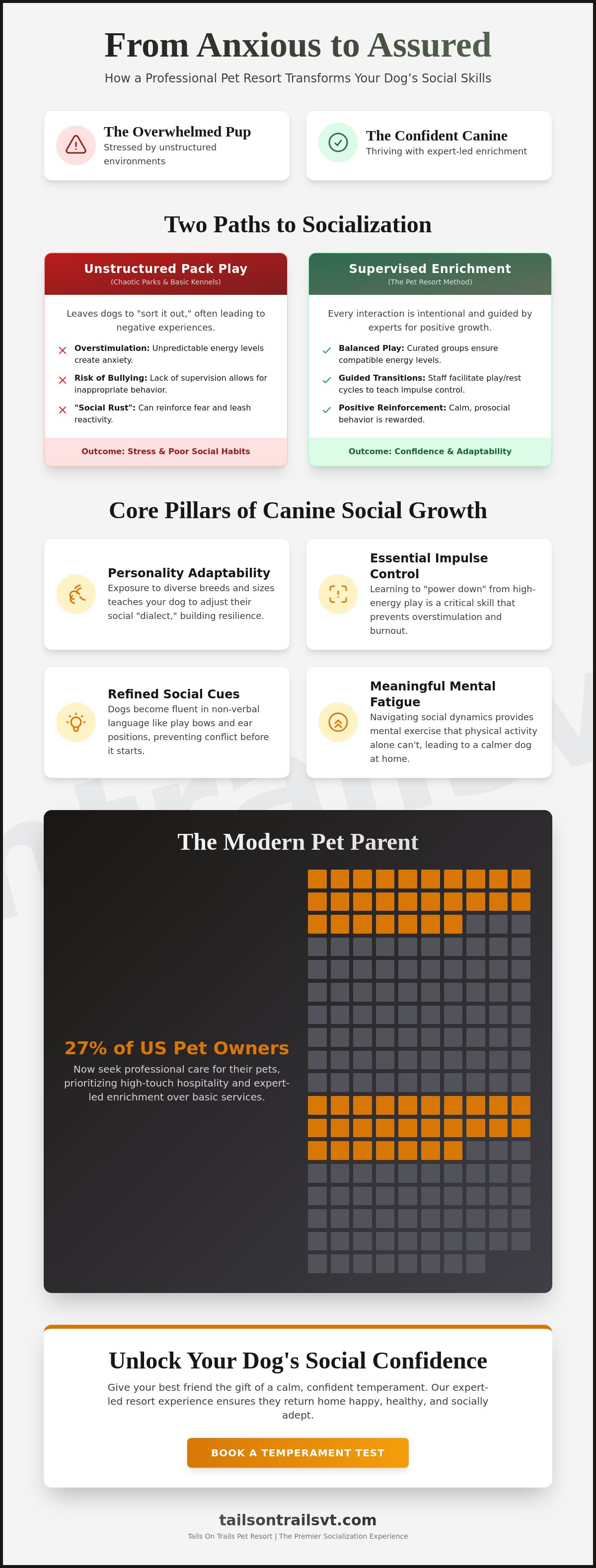
The Crucial Difference: Supervised Enrichment vs. Unstructured Pack Play
Many pet parents worry their dog will be bullied or simply overwhelmed by a chaotic group. This concern is valid. In many traditional kennels, the focus is on occupancy rather than individual enrichment. These environments often rely on unstructured play, which forces dogs to navigate complex social hierarchies without guidance. At a luxury Pet Resort, we replace this chaos with supervised enrichment. By maintaining climate-controlled, stress-free settings, we ensure your pup stays focused on positive social learning rather than survival. The environment should feel like a second home, not a high-traffic lobby.
When you ask, will daycare help my dog's social skills, the answer depends entirely on the structure of the day. Unstructured environments often lead to "rough play" becoming the default. Without a professional to guide interactions, a shy dog may learn to hide, while a more assertive dog may learn that bullying gets them what they want. Neither outcome builds confidence. A resort setting prioritizes the emotional well-being of the dog, ensuring that every interaction is a step toward a more balanced and calm temperament.
Mitigating the Risks of Overstimulation
When play becomes "adrenalized," dogs stop learning. Their brains shift into a fight-or-flight state, which hinders the development of actual social skills. To prevent this, we incorporate designated rest periods in our private, cozy Pup Cabins. These breaks allow the canine brain to process the morning's social lessons in a peaceful environment. Our "No Wire Cage" philosophy is central to this mission. Wire cages can cause barrier frustration and high cortisol levels; instead, our serene accommodations provide the tranquility needed for true emotional recovery between play sessions.
The Role of the Expert Handler
A low dog-to-human ratio is the non-negotiable standard for safety and quality. Our professional caregivers act as "social referees," stepping in to ensure every family member feels safe and respected. This level of care requires deep behavioral training. Our staff is trained to recognize micro-signals of stress, such as lip licking or "whale eye," before they escalate into conflict. While 27% of pet owners use some form of daycare, only a fraction of those facilities provide the expert-led, high-touch hospitality that truly answers the question: will daycare help my dog's social skills? When your dog is under the watchful eye of a dedicated Dog Concierge, they aren't just being watched; they're being mentored in the art of canine etiquette.
Assessing Your Dog’s Social Readiness for a Resort Setting
Before your pup joins the pack, we must ensure they are truly ready for the social spotlight. Every guest at our resort begins their journey with a comprehensive Temperament Test. This evaluation isn't a "pass or fail" exam; it's a professional observation of your dog’s comfort levels and natural communication style. We identify whether your pup is a "Social Butterfly," who greets every new face with a play bow, or a "Selective Socializer," who prefers a smaller, curated circle of friends. If you've been asking, will daycare help my dog's social skills, the answer starts with this honest assessment. For dogs who aren't quite ready for group play, we often recommend our specialized wellness or physical therapy tracks to build confidence first.
A half-day trial is the gold standard for introducing a new guest to our second home. It allows your dog to experience the resort rhythm without feeling overwhelmed by a full day of activity. This gradual introduction ensures they associate our facility with joy and safety. If a dog shows signs of extreme stress or "shutting down," we pause. We believe no animal deserves to be pushed beyond their emotional limits. Our goal is to ensure every visit is a premium experience that leaves your dog better than we found them.
Is Your Dog a Good Candidate for Group Play?
Not every dog needs to be best friends with everyone to be considered "well-socialized." Understanding social tolerance is key to a happy resort stay. We look for a few essential markers before welcoming a dog into group play:
Basic Foundation: A history of positive interactions with other pets and humans.
Health Standards: Current vaccination status to ensure the well-being of the entire family.
Age-Appropriate Energy: Adolescents (6 to 18 months) often need high-energy play, while seniors may require the quiet luxury of a private Pup Cabin.
Preparing for the First Visit
Your energy during drop-off sets the tone for your dog's entire day. When you stay calm and confident, your pup follows your lead. It’s helpful to communicate your pet’s unique triggers or "quirks" to your Dog Concierge during check-in. Whether they are heading to the slopes of Mount Snow or enjoying a day of leaf peeping, many local pet parents choose our "Doggy Bus" transportation. This premium service reduces morning transition stress by providing a familiar, comfortable ride to the resort. Ready to see if our environment is the right fit? You can schedule your pup's temperament test today to begin their journey toward social confidence.
Elevating Socialization: The Luxury Pet Resort Advantage
Choosing a facility for your four-legged family member shouldn't feel like a compromise. While standard kennels prioritize occupancy, a luxury Pet Resort operates as a second home where emotional well-being is the primary objective. This environment is an investment in your dog’s long-term behavior. By moving beyond basic supervision and into the realm of high-touch hospitality, we provide a conclusive answer to the question: will daycare help my dog's social skills? In this setting, your pup isn't just "staying" somewhere; they are participating in a tailored lifestyle experience that fosters confidence and calm.
Our Dog Concierge concept is the heart of this premium approach. Every guest receives a personalized care plan that respects their unique social pace and personality. We understand that a dog's social needs are not static; they shift based on age, energy, and even the season. Whether you're visiting for winter sports at Mount Snow or enjoying the autumn leaf peeping, your dog’s day is curated to include more than just play. We integrate "Enrichment Services" like mental puzzles and cognitive wellness exercises that challenge the brain as much as the body. This holistic focus ensures that the answer to will daycare help my dog's social skills is a resounding yes, as we address the psychological roots of social confidence.
Tailored Social Groups
The secret to successful socialization is the art of "matchmaking." We don't believe in the "one big pack" philosophy that leads to stress and overstimulation. Instead, our expert handlers group dogs by size, play style, and energy level to ensure high-quality social "conversations." These small, intimate playgroups allow for nuanced interactions where dogs can practice the social cues we discussed earlier without feeling crowded. Our luxury resort treats each dog as a cherished family member, not a client number, ensuring they receive the individual attention they deserve.
The Peace of Mind Guarantee
We know that "pet parent guilt" is real, especially when you're heading out for a long day on the slopes. That's why transparency is a cornerstone of our service. You’ll receive regular updates on your pup's social progress, providing the peace of mind that they are thriving in a safe, supervised environment. By integrating canine wellness into our daily rhythm, we ensure that physical health supports social joy. With the pet daycare market projected to grow 8% annually through 2032, it's clear that more owners are demanding these higher standards. We are proud to lead that charge by offering a "no wire cages" sanctuary that prioritizes love and compassion above all else. Ready to see your pup thrive? Explore our premium daycare and resort services today and discover the difference that expert-led enrichment can make.
Elevate Your Pup's Social Confidence Today
Choosing a structured, expert-led environment is the essential difference between a dog that is merely exhausted and one that is truly socially refined. You've discovered how intentional enrichment and personalized attention prevent the stress and overstimulation often found in traditional, unstructured kennels. When you ask will daycare help my dog's social skills, the answer depends on the quality of the care they receive. Our "no wire cages" philosophy ensures a serene, stress-free stay, while our dedicated Dog Concierge service provides the tailored support every guest needs to flourish.
Your furry family member deserves more than just a place to wait; they deserve a high-touch hospitality experience that builds lasting social resilience. Whether you're spending your day on the Mount Snow slopes or enjoying a local Vermont getaway, you deserve the peace of mind that comes from professional care. Give your dog the vacation they deserve; book a stay at Tails On Trails Pet Resort and join the 27% of pet parents choosing professional enrichment for their pets. We are ready to welcome your pup into our second home with open arms and expert care.
Frequently Asked Questions
Is daycare good for a dog that is shy or fearful?
Yes, daycare is beneficial for shy dogs if the environment is a low-stress, structured resort rather than a chaotic pack. We use small, curated playgroups to prevent fearful guests from feeling overwhelmed. This gentle exposure builds their confidence at a pace that respects their individual personality and boundaries.
Can my dog learn bad habits from other dogs at daycare?
In a professional setting, dogs are prevented from learning bad habits through active, expert supervision. Our handlers act as social referees to interrupt rude behaviors like mounting or excessive barking immediately. This ensures your dog learns only polite social cues and appropriate play manners during their stay.
What is the difference between a dog kennel and a pet resort?
A dog kennel typically provides basic housing in wire cages, while a Pet Resort offers a high-touch hospitality experience. We provide private Pup Cabins and personalized enrichment tailored to each guest. Our "no wire cages" policy ensures your dog feels like they are in a second home rather than a storage facility.
How often should my dog attend daycare to see social benefits?
Attending 1 or 2 days per week is generally sufficient to see lasting social benefits and improved confidence. Regularity helps your dog become personality adaptable without causing the social burnout that can occur with daily attendance. This rhythm keeps their social stamina high for your weekend trips to the Mount Snow slopes.
What happens if my dog doesn’t get along with another dog in the group?
Our low dog-to-human ratio ensures that if a personality clash occurs, we can intervene before it escalates. We use a sophisticated matchmaking process to group dogs by energy and size. If a specific pairing doesn't work, we simply move the guests to different groups to maintain a harmonious environment for everyone.
Will daycare help with my dog’s separation anxiety at home?
Daycare provides the mental and physical fatigue that often alleviates the symptoms of separation anxiety at home. When parents ask, will daycare help my dog's social skills and home behavior, the answer is found in the social fulfillment we provide. A dog that has spent the day engaging their brain is much less likely to engage in anxious, destructive behaviors.
Are there age limits for dogs to start attending daycare for socialization?
Dogs can typically start daycare once they are fully vaccinated, which is usually around 16 weeks of age. We follow strict health codes and look forward to higher safety standards like Ollie's Law, which takes effect December 31, 2026. Starting early helps capitalize on critical socialization periods while your pup’s brain is most flexible and receptive to new experiences.


Comments